Product overview
Get a complete view of the tools that power your business
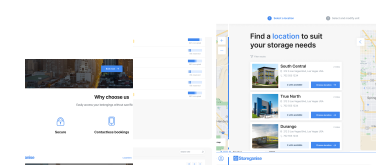
Get a complete view of the tools that power your business
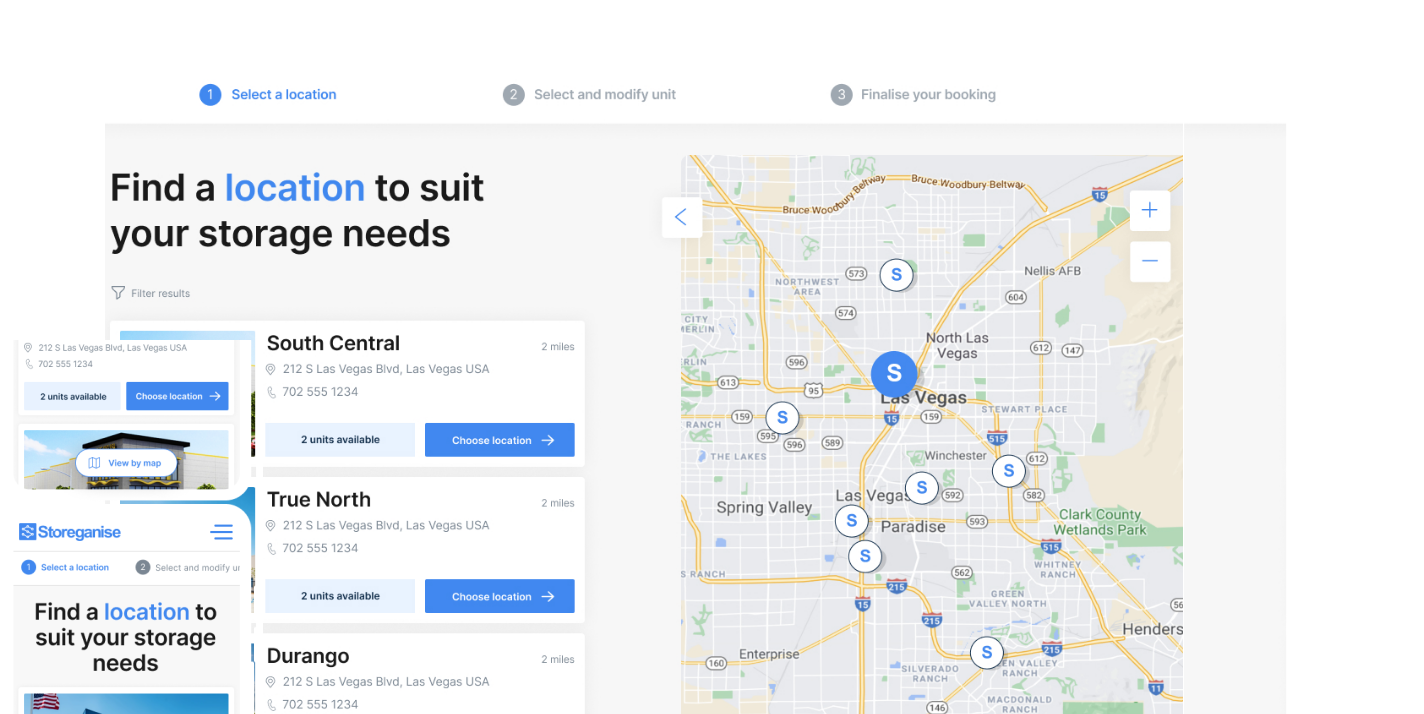
Let customers book and manage storage with ease
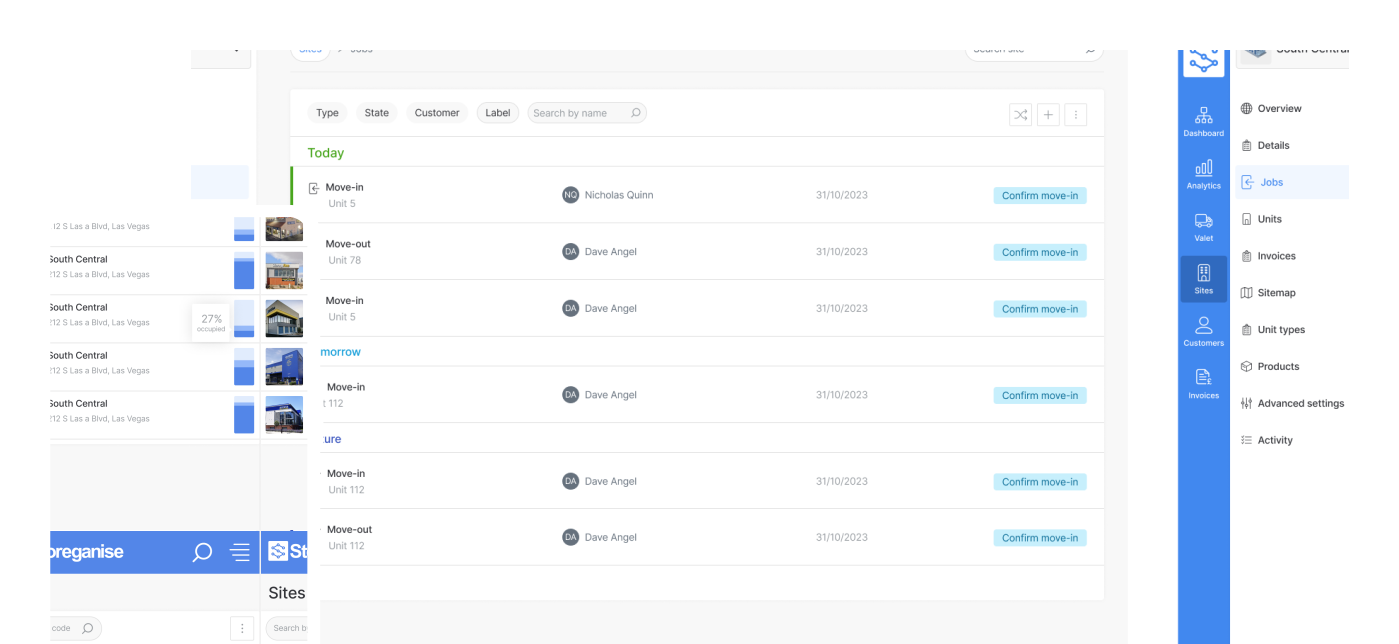
Manage your entire business in one place
Attract new customers with a website built for self-storage

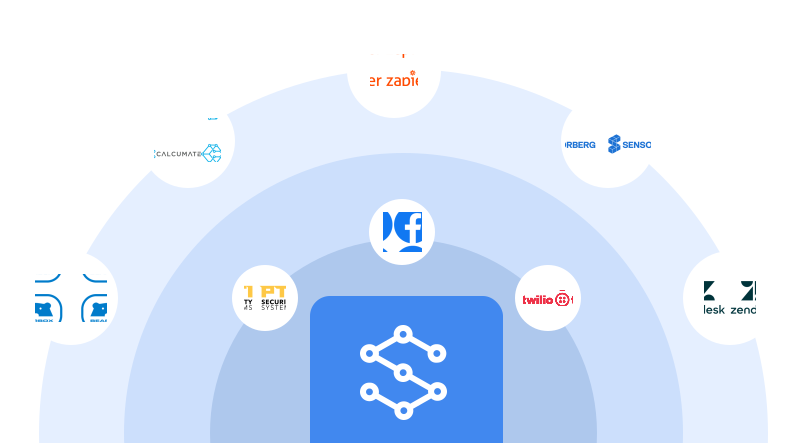
Extend your business logic with endless integrations
Learn the necessary steps required to launch a profitable shipping container storage facility business. Turn your unused

Written by: Jack Colemanzo
Data validated by: Storeganise team
Published: 2026-01-08
Updated: 2026-08-28
Last updated: August 2026
The US self-storage industry is a mature $40B+ market with over 50,000 facilities and more than 2 billion sq ft of rentable space. Source: Self Storage Association (SSA), as of 2026. That scale keeps creating opportunities for entrepreneurs looking to enter with a lower-capital business model.
Instead of going the traditional route of building or buying a storage facility, have you considered using shipping containers? As leaders in the self storage industry and makers of the Storeganise self storage software trusted by many, we reckon this is an excellent opportunity to invest in the self storage industry.
Learn The Exact Steps on How To Set Up Your Self Storage Facility In This 5 Minute Read
Key Lessons from Industry Experts
The Psychology of Self-Storage Pricing
How to diversify your revenue streams
Steps to set you up for success
Join us as we navigate the process of starting your own shipping container storage facility, from the benefits of using shipping containers to financing options, required permits, and more. But first, let's see how much demand there is for storage spaces in general.
The US self-storage industry is a large, mature market: over 50,000 facilities and more than 2 billion sq ft of rentable space, with roughly 1 in 10 households currently renting a unit and 1 in 3 Americans having used one at some point. Source: Self Storage Association (SSA), as of 2026.
Demand has grown steadily over the past decade, driven by household mobility, downsizing, and increasingly by small-business and e-commerce sellers using storage units for inventory overflow. That backdrop keeps creating opportunities for lower-capital entrants like container-based facilities.
So, why should entrepreneurs look into shipping containers when starting a self storage business and not the traditional brick-and-mortar option? Find out below.
Using shipping containers for storage facilities offers several advantages over traditional construction methods.
Here are 5 reasons why shipping containers are the perfect solution for your self-storage business:
We've established that shipping containers offer various perks over the typical storage unit build. But do they offer similar revenue potential? Is building a shipping container self storage business profitable? Get an idea below.
Shipping container storage costs less to launch and scales faster. Traditional storage, on the other hand, commands higher rents, attracts more tenants, and delivers stronger long-term returns per square foot.
| Factor | Shipping Container Storage | Traditional Self-Storage |
|---|---|---|
| Unit Purchase Cost | $2,100 – $3,700 per unit (used WWT) | $55 – $90 per sq ft (single-story build) |
| Average Monthly Rent Earned | $100 – $250 per container | $70 – $300 per unit |
| Climate Control | Expensive to retrofit, rarely standard | Widely available, built-in from construction |
| Zoning Approval | Restricted in many urban municipalities | Broadly accepted across most markets |
| Scalability | High, add containers without construction | Requires planning permission and capital |
| Tenant Perception | Functional, suits budget-conscious renters | Professional, preferred by most tenants |
| Setup Timeline | Days to weeks | 12 to 24 months from planning to opening |
| Ongoing Maintenance | Low, steel containers are durable | Moderate, roofing, plumbing, electrical |
| Security Infrastructure | Requires a separate investment to install | Usually built into facility design upfront |
| Long-Term ROI | Faster breakeven, lower ceiling | Slower start, significantly stronger returns |
Source for traditional build cost: Marcus & Millichap Self-Storage Investment Outlook, as of 2026. Container cost ranges verify against your local broker at time of purchase.
Container purchase is the biggest single line item, but far from the only cost. Realistic ranges for a US-based container storage facility:
| Line Item | Range | Notes |
|---|---|---|
| Land (lease or purchase) | Varies widely by market | 2-5 acres typical; leasing lower-cost than purchase |
| Containers (used WWT, 20-ft) | $1,800-$3,500 each | Prices drift with global freight rates |
| Containers (new/one-trip, 20-ft) | $3,500-$5,500 each | Higher for 40-ft or specialty units |
| Site prep (grading, gravel, drainage, fencing) | $50,000-$150,000+ | Depends on site condition and lot size |
| Permits and zoning | $2,000-$15,000+ | Higher where conditional-use permits are required |
| Security (cameras, gate, lighting, alarms) | $20,000-$60,000 | See our storage facility security guide for the per-layer breakdown |
| Marketing (launch + first-year local digital) | $10,000-$30,000 | Google Business Profile + local paid campaigns |
Total launch capital for a modest 50-100 container facility typically lands in the $200,000-$500,000 range, before land if leased. Ground-up traditional self-storage builds run into the low millions on the same footprint (see our self storage building costs guide for the sourced per-sq-ft ranges). That capital delta is the main reason container storage exists as a business model.
Container-price ranges verify against Container xChange market data or a major container broker at the time of purchase.
The potential profitability depends on container count, rental pricing, and occupancy rate. Rather than model at 100% occupancy (unrealistic), the numbers below use 85%, the target occupancy for a stabilized US self-storage facility. Source: Self Storage Association (SSA) operator surveys and Marcus & Millichap Self-Storage Investment Outlook, as of 2026.

Illustrative math using midpoint container costs of $3,000 per unit and monthly rent of $175 per container (midpoint of the $100-$250 range). Adjust for your actual market before using in a real plan.
| Containers | Container Investment | Gross Monthly Revenue at 85% | Annual Revenue at 85% |
|---|---|---|---|
| 50 | $150,000 | $7,438 | $89,250 |
| 100 | $300,000 | $14,875 | $178,500 |
| 250 | $750,000 | $37,188 | $446,250 |
Break-even reality: those revenue figures are gross. With operating costs running 30-40% of gross operating income (Source: Marcus & Millichap Self-Storage Investment Outlook, as of 2026), NOI on a 100-container facility runs roughly $107,000-$125,000/year at 85% occupancy. Full break-even, including land, site prep, permits, security, marketing, and financing, typically lands in the 3-5 year range depending on how heavily you leverage debt.
Even during lease-up at 60-70% occupancy, well-located container facilities can generate positive cash flow, especially if you're running the site with automation software rather than full-time staff. That's the operating model container storage assumes: unmanned or lightly-manned, remote-managed, and paying its own way from month one.
The self-storage business is relatively recession-resistant, as people always need extra space during moves, downsizing, or life transitions.
The single highest-leverage move for a new container storage operator is location selection: not chasing the busiest metros, but finding underserved towns where the numbers point to real, unmet demand.
Here's a repeatable method:
The point isn't a single killer market. It's a method you can run against dozens of candidate towns and let the numbers pick the winner.
The location of a shipping container self storage facility will determine its patronage, which directly impacts revenue and overall success. When choosing a location for your storage facility, consider accessibility and demand.
Look for areas near:
Areas near colleges are a great idea for several reasons outlined below:
This location option can help ensure a steady customer base and maximise the utilisation of your storage facility.
Looking for areas near senior care facilities when starting a shipping container storage facility business is another great idea. Senior care facilities often have limited space for residents' personal belongings, creating a need for additional storage options.
Locating your storage facility nearby means you can cater to the needs of seniors and their families who require secure and accessible storage solutions. This targeted approach allows you to tap into a specific market niche and establish partnerships with senior care facilities, increasing the potential for a steady stream of customers and referrals.
You can also consider areas near major establishments when starting a shipping container storage facility business. These corporations often have a need for additional storage space for their inventory, equipment, or documents.
With such a location, you can offer storage services to these corporations, becoming a convenient and reliable solution for their storage requirements. This type of location allows you to tap into a lucrative market and potentially secure long-term contracts with major businesses, ensuring a consistent and sustainable source of revenue for your business.
Consider areas near industrial parks when starting a shipping container storage facility business. Industrial parks are often home to businesses that require extra storage space for their supplies, equipment, and inventory. Being in close proximity allows you to cash in on this demand; you can better establish strong relationships with industrial businesses and ensure a steady flow of clients.
Lastly, areas near military bases are good for starting a shipping container storage facility business. Military personnel often require shipping containers as storage units when they're deployed or relocated. You can cater to the storage needs of service members and their families, providing a convenient and secure option.

Additionally, military bases are known to have strict security measures; you can market your facility as an attractive choice due to its proximity. This targeted approach can help you establish a reliable customer base and potentially secure long-term contracts with military personnel and organisations.
Besides getting a good location to solve the problem of where to store shipping containers, you must also ensure that you comply with local zoning codes and regulations by contacting the local zoning board and obtaining the necessary permits. Keep reading to learn more.
When starting a storage facility business, you'll need to obtain certain permits and licences to ensure compliance with local regulations.
Here are 5 permits you may need to consider:
It's important to consult with local authorities, such as your state or municipal planning department, to determine the specific permits and licences required for your storage facility business based on its location and operational activities. While sorting out location requirements and getting the necessary permits, you should also think of how to raise capital for your shipping containers.
Your shipping container self storage building costs will vary depending on factors such as land and zoning costs, container purchase costs, and site preparation expenses.
There are many financing routes for commercial businesses like yours, and here are 6 top options to explore:
Remember to thoroughly research and compare the terms, interest rates, and repayment options associated with each financing method. Additionally, consult with a financial advisor or accountant to ensure you make informed decisions that align with your business goals and financial capabilities. With financial requirements sorted out, the next thing to do is to purchase your shipping containers, and we have some tips for you below.
When purchasing shipping containers for your storage facility, you have three main tiers to choose between:

Whether new or used, run this checklist before wiring money:
The used container market has active scams. Reduce risk by:
Reputable shipping container providers include Willbox and major US brokers you can find via Container xChange's operator directory.
So, how should you prep your shipping containers to make them ready for use as storage units? Continue reading for details.
To make your shipping containers more appealing and extend their lifespan, it's essential to properly prep and paint them.
Here are 10 things you can do for proper storage container conversion:
Proper adherence to these steps can ensure your self storage shipping containers are properly prepped and ready to serve as secure and reliable storage spaces for your customers' valuable items. But what good is a well-prepared shipping container business with a poor marketing strategy? How do you get the word out about your business to the right audience? Find out in the next section.
Having understood how to start a shipping container business, the only thing left to ensure a profitable business is a good marketing and promotion strategy.
Consider the following tips:
For further reading on marketing ideas, check out our comprehensive guide on self storage marketing. With the right approach, creating a self storage business out of shipping containers can be a lucrative endeavour.
Starting a shipping container storage facility business is a lucrative venture with lower construction costs and more flexibility compared to traditional storage facilities. With the increasing demand for storage space, investing in shipping containers provides a cost-effective and efficient solution.
Understand that running a shipping container storage facility business can be demanding. However, using a self storage software to automate your business is a good way to stay afloat, as it helps you cut unnecessary staffing costs with features like contactless booking, etc. You can also check out Willbox to purchase high-quality shipping containers to kickstart your venture.
Total launch capital for a modest 50-100 container facility typically lands in the $200,000-$500,000 range, before land if leased. That covers used WWT containers at $1,800-$3,500 each, site prep at $50,000-$150,000+, permits, security infrastructure, and first-year marketing. New/one-trip containers push the container line item higher, at $3,500-$5,500 each. Compare that to a ground-up traditional self-storage build, which runs into the low millions on the same footprint. See the Startup Budget: Ranges by Line Item table above for the full per-line breakdown.
Map every existing self-storage facility within a 30-mile radius of any candidate town, cross-reference with population data, and look for towns with 5,000+ residents and no facility within 10 miles. Housing dynamics (new residential builds, apartment complex development, rental turnover) confirm real demand. Verify the zoning before falling in love with a site. Container storage's biggest advantage is you can test a market with 10-20 containers first, at a fraction of a traditional build's cost, and let occupancy inside 6 months tell you whether to scale. See the Finding a Gap Market section above for the full method.
The industry standard includes 20-foot and 40-foot containers, offering flexibility for different use cases.
Buy at wind-and-watertight (WWT) grade at minimum, and inspect every unit (or its photos) before wiring money. Check that doors open, close, and latch smoothly (sagging doors mean a bent frame). Look for pooling, punctures, or soft spots on the roof, no rot or oil stains on the floor, intact corner castings, and only surface rust, not through-metal rust. Buy from established brokers with a physical yard address, pay through escrow or documented invoice (never wire to a personal account), and verify the CSC plate. See the Inspection Checklist and Scam-Avoidance Notes in the Guidance on Purchasing Shipping Containers section above.
Self storage shipping containers used for storage purposes can last an average of 25-30 years.
Protection involves anti-corrosion coatings, proper site drainage, and routine inspections.
Yes, containers can be stacked; however, this requires engineered design, reinforced foundations, and strict compliance with safety codes.
Pricing should be based on local market rates, unit size, demand, and competitor positioning. To maximize revenue, operators often adjust pricing dynamically, especially as occupancy levels fluctuate over time.Not necessarily. With the integration of automation tools, many facilities operate with minimal staffing.
Yes, comprehensive coverage is essential. In practice, most operators carry property insurance, public liability insurance, and optional tenant protection plans.

Jack Colemanzo is the Head of Sales at Storeganise, based in Barcelona. With a strong background in the technology industry, spanning software development, sales management, and team leadership, Jack is a catalyst for growth and a builder of positive team culture.
View bio