Guides
2025
A closer look at self storage franchises in 2026—how automation, proven systems, and strong support can impact your investment returns.

Written by: Jack Colemanzo
Data validated by: Storeganise team
Published: 2025-07-28
Updated: 2026-08-30
Self storage remains one of the most resilient commercial real-estate categories in the US and UK, with steady demand across housing cycles and roughly 1 in 10 US households renting a unit. The industry is projected to keep growing through the decade, driven by household formation, downsizing, small-business overflow, and e-commerce fulfilment. Source: Self Storage Association (SSA) industry data, as of 2026. If you are considering starting a self storage business, a franchise is one of three main entry routes worth understanding before you commit capital.
A self storage franchise refers to an established storage brand looking to expand its footprint. Instead of owning and operating every facility itself, the brand licenses its name, playbook, and support systems to independent operators who build and run facilities under the parent brand. For the operator, that means a proven model and national marketing muscle in exchange for a franchise fee, royalties, and territory restrictions. If you plan to run multiple sites, the franchise route also gives you an operational blueprint that's harder to build from scratch.
Learn The Exact Steps on How To Set Up Your Self Storage Facility In This 5 Minute Read
Key Lessons from Industry Experts
The Psychology of Self-Storage Pricing
How to diversify your revenue streams
Steps to set you up for success
By delegating critical operational requirements, franchises can expand rapidly, and new players can break into the self storage industry more quickly, and often more cost-effectively. However, the big question is: as a budding or experienced entrepreneur, should you consider a self storage franchise in 2026?
A self storage franchise can be the right approach if you work with the right franchisor.
A key advantage provided by franchisors is automation; always work with a franchisor that offers automated self storage.
Before you invest in a franchise, consider location, cost, and the franchise's reputation and level of support.
To ensure your franchise succeeds, manage your space efficiently, utilize community engagement, and consider diversifying your income stream.
The self-storage franchise market is dominated by portable and mobile storage brands, not fixed-site facilities. Understanding why matters before you commit.
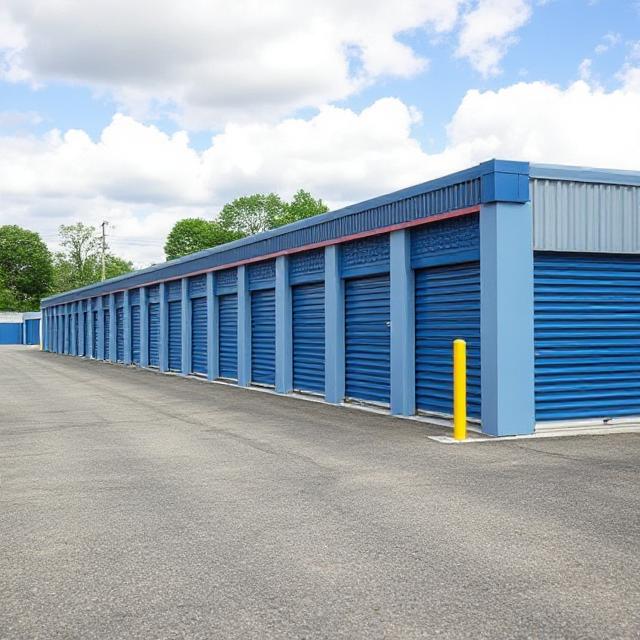
To determine if a franchise is the best approach to venturing into the self storage industry, let's examine some of the benefits it offers. The key feature that sets a franchise apart from many other facilities is automation. Therefore, the following advantages will focus on what an automated franchise can offer you:
Investing in a self storage franchise can significantly boost your operational efficiency since many franchises offer automation using self storage software. Such centralized management platforms (e.g., Storeganise) reduce the administrative burden by streamlining processes such as invoicing, bookings, and payments. This allows franchise owners to focus on more strategic tasks that drive business growth.
By investing in an automated self storage franchise, you minimize manual input, reduce errors, and save time and resources. This allows you to create and sustain a smooth operational flow, helping you stand out in the competitive self storage industry.
An automated self storage franchise enhances customer convenience and satisfaction by offering digital solutions that allow clients to manage their storage needs effortlessly. Features like online rentals, smart entry systems, and real-time reporting give customers control over their transactions from anywhere, at any time.
This convenience, coupled with the security of climate-controlled storage facilities, provides a superior experience that modern customers demand. As industry trends indicate, embracing automation ensures your facility remains relevant and competitive, meeting the needs of both residential and commercial customers who value efficiency and flexibility.
Automated self-storage franchises often enjoy higher occupancy rates and rental prices, thanks to their enhanced customer service and efficient operations. The reduced need for extensive on-site staff cuts costs while utilizing technology to maintain high service quality.
Moreover, the data-driven insights provided by automated self storage technology help franchisees make informed decisions about pricing, marketing, and expansion strategies, further enhancing revenue streams. With self storage unit franchise opportunities like Storage Authority and other reputable options, the blend of automation and proven business models offers a lucrative path for those seeking profitable returns in the storage and moving industry.
To capitalize on these benefits, don't just select a franchise for convenience and a low barrier to entry. Instead, choose a facility with the latest self storage automation technology to ensure you're getting all the benefits of investing in a franchise. We provide details on the specifics to consider below.
Before you spend weeks comparing franchise brochures, understand a structural reality: self storage is primarily a real-estate play, not a franchise category.
A traditional drive-up or climate-controlled facility is worth roughly 60-70% of its enterprise value in the underlying land and building. The operator captures the remaining 30-40% through operations, pricing, and occupancy. That ratio makes fixed-site self storage look and behave more like an income-producing property than a restaurant or a retail brand. The value creation is in the land acquisition, entitlement, and stabilization, not in the operating playbook.
That's why the four largest US self-storage brands (Public Storage, Extra Space Storage, CubeSmart, National Storage Affiliates) do not franchise. They acquire, build, or joint-venture, but they don't sell franchises. The economics don't warrant giving up a 5-8% royalty on gross revenue when the operator's real return is the appreciating asset.
Where franchising does work in this industry:
Understanding this filter early tells you which brands are worth reading FDDs on and which are marketing pages with no real franchise offering behind them. If your goal is a passive real-estate investment, buying an existing facility or partnering with a REIT is often a better route than a franchise. If your goal is to run an operating business with a national brand and playbook, portable storage is where most of the real franchise opportunities sit.
Before you buy or invest in a franchise, always do the following:
First, it's crucial to closely examine the support and reputation of any potential franchisor. Reputable companies usually provide franchisees with comprehensive support, which may include training, operational systems, marketing resources, and technical assistance. Selecting a franchisor with a robust support system can significantly ease the process of running your franchise.
Moreover, it's wise to investigate the franchisor's reputation within the industry. Speaking with existing franchisees can provide valuable insight into their experiences and satisfaction with the franchisor's support and systems. A reliable support network and positive reputation are often indicators of a sound investment. The FDD Item 20 (turnover) is the single best data source for this: it lists every current, terminated, and non-renewed franchisee for the last three years.
It's also important to understand the financial obligations associated with buying a self storage facility franchise. Initial investments can be substantial, encompassing franchise fees, site acquisition or lease, construction, and ongoing royalty payments. Additionally, advertising contributions and operational costs need to be considered to form a realistic budget.
Different storage franchise models come with varying financial commitments. Hence, when evaluating storage unit franchises for sale, assessing the complete financial picture (including franchise fee, royalty rate, marketing fund contribution, and total initial investment per FDD Item 7) is essential to determine your venture's feasibility and your potential return on investment.
Locating your self storage unit franchise in an area with growing market demand is critical for success. High real estate costs can impact your profitability, so balancing location with investment costs is vital.
Research the local demand for storage services and consider both residential and commercial customers in the area. Storage facilities in thriving regions or urban centers may offer higher revenue potential. Additionally, identifying locations with few competitors can enhance your market position.
We recommend collaborating with real estate experts and business mentors to help you navigate these complexities and ensure you make an informed decision when investing in a franchise. After deciding which self storage business franchise to buy, your next task is to devise a plan to run your business operations in a way that positions your facility for success.
The table below compares the main self-storage franchise brands active in the US and UK/Europe. All figures come from each brand's most recent Franchise Disclosure Document (Item 7 for total investment, Item 6 for royalties). FDDs are filed annually and vary by state, so pull the current one directly from the franchisor before making a decision. Do not rely on third-party aggregator sites.
| Brand | Region | Category | Franchise fee (Item 5) | Total initial investment (Item 7) | Royalty (Item 6) | Marketing fund (Item 6) |
|---|---|---|---|---|---|---|
| Storage Authority | US | Fixed-site (drive-up + climate-controlled) | $60,000-$80,000 | $2,000,000-$5,000,000+ (land + build) | 6% of gross revenue | 1-2% |
| PODS | US, UK, Canada, Australia | Portable | $50,000-$60,000 | $1,000,000-$3,000,000+ | 8% of gross revenue | Included in royalty |
| UNITS Moving and Portable Storage | US | Portable | $60,000-$80,000 | $600,000-$1,500,000 | 8% of gross revenue | 2% |
| Zippy Shell | US, Australia | Portable | $50,000-$60,000 | $500,000-$1,200,000 | 6-8% of gross revenue | 2% |
| 1-800-PACK-RAT | US | Portable | $50,000-$60,000 | Per current FDD | Per current FDD | Per current FDD |
| UK / EU fixed-site | UK, EU | Fixed-site | Rare | Corporate-dominated market; franchising uncommon | N/A | N/A |
| UK / EU portable | UK, EU | Portable | Regional partnerships more common than true franchises | Varies by regional agreement | Varies | Varies |
Notes on how to use this table:
Source: each brand's most recent Franchise Disclosure Document (Item 5, 6, 7), filed annually with state franchise regulators. As of 2026.
Every franchisor operating in the US is required to give you a Franchise Disclosure Document (FDD) before you sign anything, and to give it to you at least 14 days before you pay any money. The document is long (usually 200-400 pages) but the four items below tell you 90% of what you need to make a decision.
Item 5: Initial fees. The franchise fee itself, plus any other upfront fees payable to the franchisor. Non-refundable. For self storage, expect $50,000 to $80,000.
Item 6: Other fees. Ongoing royalty (usually a % of gross revenue), marketing fund contribution, technology fees, audit fees, and transfer fees. A fixed-site self-storage royalty in the 5-6% range is typical; portable storage runs 7-8%.
Item 7: Estimated initial investment. The total capital you need to open and operate for the first three months, given as a low and high estimate. For fixed-site self storage, this figure is dominated by land and construction, so it varies 3-5x by market. For portable, the range is tighter because containers and lift trucks are the main capital.
Item 19: Financial performance representations. This is the only place the franchisor can make claims about how much a franchisee earns. Some brands include unit economics tables here; many leave it blank. A blank Item 19 means the franchisor is unwilling to stand behind any specific revenue or profit figure. That is data.
Item 20: List of outlets and franchisees. Every current franchisee, every terminated franchisee for the last three years, and every non-renewed unit. Call a random sample of the current ones. Call several of the terminated ones. The signal in Item 20 is stronger than anything the franchisor can tell you directly.
Read these five items first. Everything else in the FDD is context.
Beyond the FDD line items, running a self storage franchise carries operating costs the franchisor's sales page rarely emphasizes. Budget for these on top of your royalty and marketing fund contributions.
| Cost category | Typical annual range | Notes |
|---|---|---|
| On-site staffing (1-2 FTE) | $60,000-$120,000 | Manager plus part-time relief. Fully-automated / kiosk facilities run lower but never zero. |
| Technology stack | $3,000-$15,000 | Purpose-built self-storage platform (property management, gate integration, tenant portal, payments), often required by the franchisor. |
| Security infrastructure (year 1 capital) | $25,000-$80,000 | Cameras, gate hardware, individual door alarms, LED perimeter lighting. Higher for climate-controlled. |
| Security monitoring (annual) | $3,000-$12,000 | Third-party monitoring subscription plus system maintenance. |
| Insurance (annual) | $8,000-$25,000 | Property, general liability, cyber, umbrella. |
| Utilities | $12,000-$60,000 | Electric dominates for climate-controlled sites; ranges by region and site size. |
| Property taxes | Site-specific | Often 1-3% of assessed value annually. |
| Repairs and maintenance reserve | 3-5% of gross revenue | Roof, doors, paving, HVAC service, pest control. |
| Franchise-required upgrades | $5,000-$30,000 per cycle | Rebranding, tech refresh, signage refresh on a 3-5 year cadence. |
Source: SSA operator surveys, Marcus & Millichap Self-Storage Investment Outlook, and each brand's FDD Item 6 and Item 8 (required suppliers and technology), as of 2026.
The single line most first-time franchisees underestimate is franchise-required technology and rebranding upgrades. FDD Item 6 lists them, but the true frequency and cost is best surfaced by calling existing franchisees from Item 20.
To ensure a profitable return on your investment, consider the following storage management tips:
Maximizing rentable space within your storage facility is crucial to boost profitability. If it's not against the franchise agreement, consider adopting an efficient unit mix layout, like employing a 5-foot grid system or double-loaded corridors, to increase storage capacity without expanding the physical unit.
Limiting non-rentable areas (such as offices and lobbies) through innovative design solutions also enhances revenue potential. You may consider consulting a self storage design expert to further aid in creating an optimal layout.
Effective local marketing strategies can elevate your storage unit franchise. To enhance your presence:
Targeted, localized marketing not only builds brand awareness but also attracts a steady stream of new customers.
Strengthening community ties can lead to fruitful partnerships and referrals, which are invaluable for business growth. Ensure you're providing exceptional customer service to retain customer satisfaction and loyalty, as this is crucial for long-term success.
Lastly, implementing ancillary services can add layers of profitability to your self storage franchise. Offer services like packing supplies, rental trucks, or climate-controlled units to meet varied customer needs. This diversification not only increases customer satisfaction but also boosts overall revenue.
A thoughtful combination of competitive pricing and diverse options can make your storage business more appealing and financially rewarding.
A self storage franchise can be rewarding with the right planning. By aligning with a reputable brand, you gain access to proven business models, comprehensive marketing support, and an opportunity to cater to both residential and commercial customers.
Whether you're interested in traditional storage units or innovative portable storage solutions, there's a wide array of self storage franchise opportunities to explore. To ensure you're getting the most out of your investment, always work with a franchise that provides automation. Automation with self storage software like Storeganise helps you improve operational efficiency, cut down on unnecessary costs, and improve customer experience.
Self storage remains a promising investment in 2025 and beyond due to increasing downsizing trends and the rise of remote work. The sector offers stability and growth potential as people seek flexible storage solutions for their belongings, making it a resilient asset class.
To start investing in self storage, consider purchasing an existing facility to tap into an established income stream. Alternatively, you can partner with a franchise for a more structured approach. Both options provide opportunities to capitalize on the growing demand for storage solutions.
Yes, storage sites are profitable. According to recent reports, new self storage businesses boast a 92% success rate. Owners can expect an average annual profit of $184,500. This high success rate and profitability make self storage facilities an attractive investment opportunity.
Total initial investment varies significantly by brand and category. Fixed-site franchises like Storage Authority run $2 million to $5 million or more (land and construction dominate). Portable storage franchises (PODS, UNITS, Zippy Shell) run $500,000 to $3 million depending on fleet size. Franchise fees alone are typically $50,000 to $80,000, and royalties run 5-6% of gross revenue for fixed-site and 7-8% for portable. Always pull the current Franchise Disclosure Document (Item 5, 6, 7) directly from the franchisor. Source: each brand's most recent FDD, as of 2026. See Franchise Cost Comparison above for the full brand-by-brand table.

Jack Colemanzo is the Head of Sales at Storeganise, based in Barcelona. With a strong background in the technology industry, spanning software development, sales management, and team leadership, Jack is a catalyst for growth and a builder of positive team culture.
View bio